
Show notes
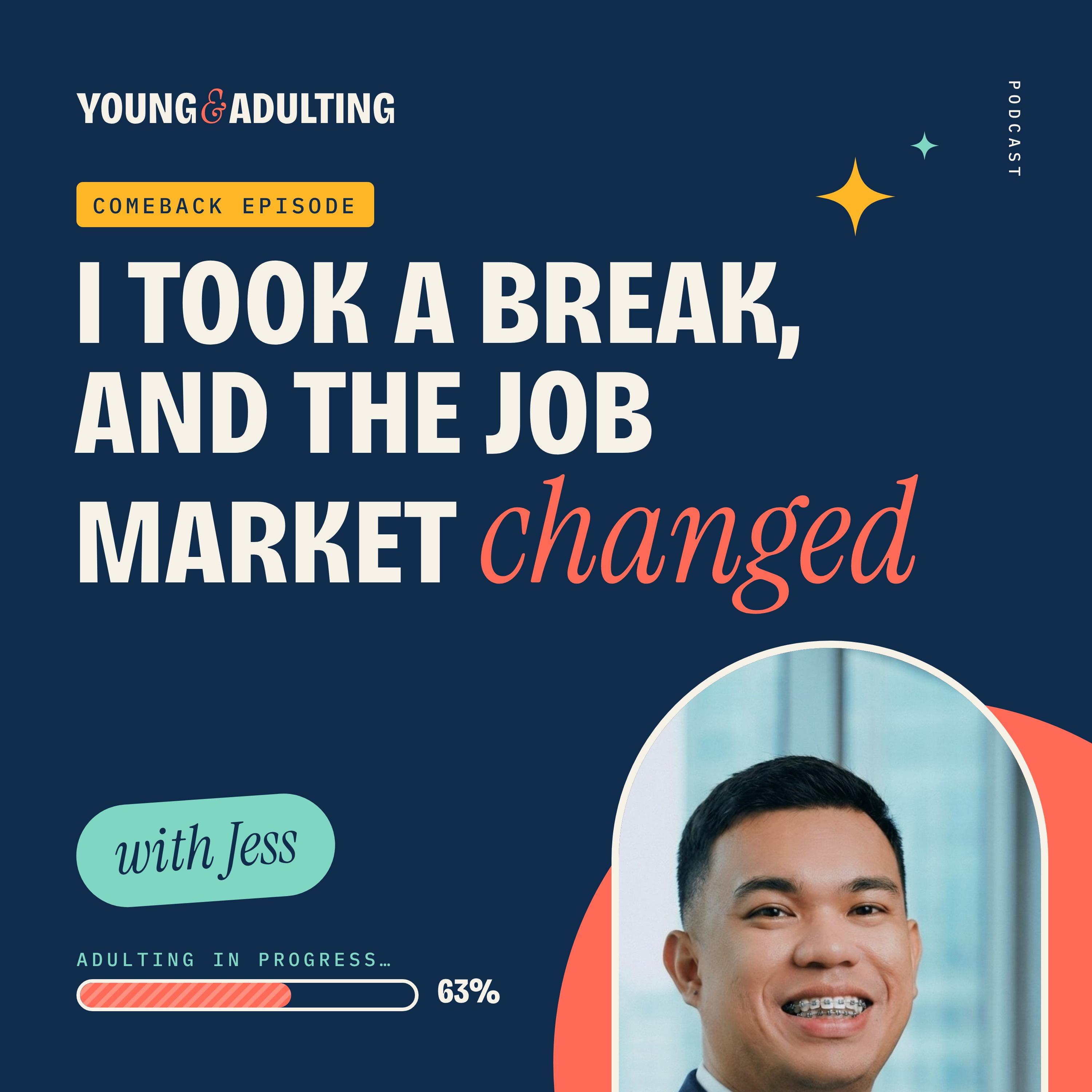
I’m back! I took some time away from the mic to rest, get to know myself better, and work through some personal struggles. Now I’m back, and the job market looks different from when I left.
In this episode, we talk about the shaky first rung of the career ladder. Why is it harder for 18- to 24-year-olds to land their first job right now? What does it feel like to keep applying and hear nothing back? And what can you do this week to move forward?
Three moves to try this week
- Build proof of work. Give employers something concrete to look at, like a sample project you can share alongside your résumé.
- Get comfortable using AI. Try it on tasks that help you learn and work.
- Build relationships. Make time to connect with people while you’re applying.
I’ll also share a 7-day challenge to help you take the first step.
If you’re feeling stuck, it makes sense. This is a tough market, and how long it takes to land a job says very little about what you’re capable of.
Chapters
0:00 Intro0:10 Cold open0:47 I’m back1:18 The first rung is shaky2:33 How it feels3:25 Three moves to try this week4:49 This week’s challenge5:19 Wrap-up and next week’s preview5:59 Outro
Next week
We’re talking about loud budgeting and how to tell your friends what’s in your budget without making things awkward.
Follow the show
- Spotify — Follow The Young & Adulting for new episodes.
- TikTok — @tyoungandadulting
- Website — JeselCura.me/podcast
Episode sources
Checked November 1, 2026.
- St. Louis Fed analysis on AI and young adult unemployment, covered by Metaintro
- Young adults and entry-level jobs in 2026, Metaintro
- Gallup on Gen Z and purpose, covered by NewsNation
- 2026 Voices of Gen Z Study, Walton Family Foundation and Gallup
-
The Young & Adulting with Jess.Real talk on life & career.
Why the first job is harder to land right now
If you're 18 to 24 and job hunting, and it feels harder than everyone said it would be, you're not imagining it. In the comeback episode of The Young and Adulting, Jess opens with a plain admission: she disappeared for a while, and while she was gone, "the whole world of work pulled a plot twist." She doesn't apologize for the break. She came back because she missed the show and believes these conversations matter.
Her topic for the return: what happens when the first rung of the career ladder starts to shake, and what you can actually do about it.
What the data says about young workers and entry-level jobs
Jess points to a few figures, all cited in the episode:
- Employment for 18-to-24-year-olds dropped by more than two percentage points from April 2023 to the end of 2025, while workers aged 25 to 64 saw no such drop.
- Young people didn't stop looking. They kept applying in a market with fewer and fewer entry-level openings.
- According to a St. Louis Fed analysis, about one third of this year's rise in unemployment for 18-to-24-year-olds comes down to AI.
Her reading of it: experienced people aren't the ones being replaced first. Fewer young people are getting their first foothold.
Why entry-level work is about training, not just pay
Jess makes the point that this isn't only about paychecks. Entry-level jobs are where you learn which numbers to trust, how a team runs and what "good" looks like. When the first rung gets thinner, hiring suffers, and so does training.
She also adds a fair note. Some researchers say we shouldn't blame everything on AI, since hiring is slow and other economic factors are at play. Her stance is not "AI is the villain." It's that the ground has shifted, and it's smart to work out where it moved.
How it feels (and why that's normal)
Numbers can't capture the feeling, so Jess adds two more data points:
- According to Gallup, 45% of Gen Z say they lack meaning, purpose, or both.
- In the 2026 Voices of Gen Z study, 55% of Gen Z students say they're thriving, but only 38% of Gen Z adults do.
Same generation, a few years apart, and the feeling drops once the real world starts. So if you feel left behind, unsure, or like everyone else got a manual except you, you're in very big company.
The line Jess wants you to take home:
"It's not a verdict on your worth."
Feeling stuck and actually being stuck are two different things, and the rest of the episode is about the second one.
Three moves for a tough entry-level job market
1. Build proof of work
A blank resume says "I have potential." A portfolio says "here's what I did." When there are fewer open entry-level doors, the people who get through are the ones who can show something real: a side project, a freelance gig, volunteer work, a small business or a case study. It doesn't have to be impressive. It just has to be real and finished.
2. Get fluent in AI, and be able to explain how you use it
If AI is taking over the routine tasks that used to train new hires, the skill now is using it well. Jess suggests picking one real task in your day, like research, drafting or organizing, and using an AI tool for it this week. Then prepare to say in an interview what you used, where it helped, and where you had to correct it. Judgment, she says, is the part employers can't automate yet.
3. Build relationships, not just applications
A lot of first jobs come from conversations, not forms. Reach out to two people this week, someone a few years ahead of you or someone in a field you're curious about, and ask for fifteen minutes. Don't ask for a job. Ask how they got started and what they'd do differently. People want to help, and that's where you hear about roles that never get posted anywhere.
The recap: prove it, use the tools, and talk to people.
This week's challenge
Pick one of the three moves and do it in the next seven days. Just one, not three:
- Proof of work: start or finish one small project and share it somewhere.
- AI fluency: use an AI tool on a real task and write down what it got right and wrong.
- People: send two messages asking for a fifteen-minute chat.
Jess's reasoning: one finished thing beats three plans. Tell her which one you picked.
Frequently asked questions
Why is it so hard for 18 to 24-year-olds to find a job right now? Per the figures Jess cites, employment for 18-to-24-year-olds fell by more than two percentage points between April 2023 and the end of 2025, while workers aged 25 to 64 saw no such drop. Young people kept applying, but there are fewer entry-level openings.
Is AI taking entry-level jobs? Jess cites a St. Louis Fed analysis attributing about one third of this year's rise in youth unemployment to AI. She also notes that some researchers caution against blaming everything on AI, because hiring is slow and other economic factors matter.
How can I stand out without work experience? Build proof of work: a side project, freelance gig, volunteer work, small business or case study. Make it real and finish it.
What should I say about AI in an interview? Be ready to explain what tool you used, where it helped, and where you had to correct it.
How do I get a job that isn't posted anywhere? Ask people for fifteen-minute conversations. Don't ask for a job; ask how they got started. Many first jobs come from conversations, not application forms.
Up next
Next week's episode is about money: Loud Budgeting: How to Be Honest About Money With Your Friends. Follow the show on Spotify or Apple Podcasts, and send this one to a friend who's job hunting right now.
Chapters
- 0:00 Cold open: I disappeared for a while
- 0:36 I'm back
- 0:56 The first rung is shaky
- 2:13 How it feels
- 3:06 What to do about it
- 4:30 This week's challenge
- 5:01 Let's wrap up
Sources
St. Louis Fed analysis (via Metaintro, 2026); Gallup (via NewsNation); 2026 Voices of Gen Z Study.
Follow the show on TikTok at @tyoungandadulting.
